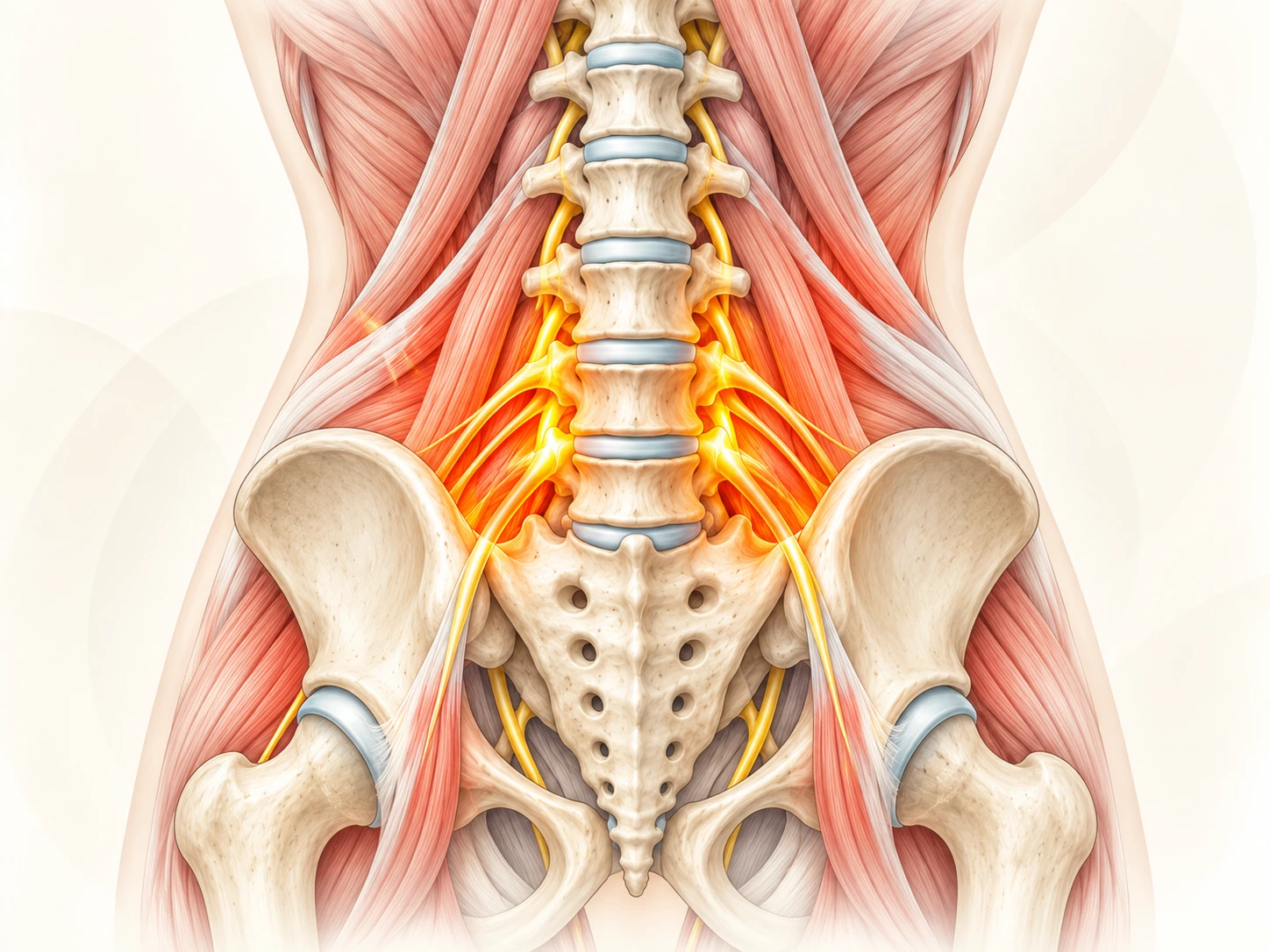
Understanding Low Back Pain
Overview
Low back pain can begin in muscles, joints, discs or nerves. A focused evaluation helps narrow the likely source and match care to your goals.
What it may feel like
- Aching, stiffness or muscle spasm
- Pain with sitting, standing, lifting or bending
- Pain that may spread into the buttock or leg
Why the pattern matters
Whether pain stays in the back, travels below the knee, changes with sitting or standing, or improves in a particular position helps narrow which structures may be involved.
Potential causes
- Muscle or ligament strain
- Arthritis of the small spinal joints
- Disc degeneration or a herniated disc
- Sacroiliac joint irritation
Other problems can look similar
- Hip or sacroiliac joint pain
- Kidney or abdominal conditions
- Peripheral nerve or muscle problems
How Dr. Ho evaluates the problem
The visit may include questions about timing, triggers, sleep and daily function, followed by an examination of movement, strength, sensation and reflexes. Imaging is considered when it can change the plan.
The role—and limits—of imaging
X-rays or MRI can add useful information, but age-related changes are common. Imaging is most helpful when its location and severity fit the symptoms and examination.
How treatment decisions are made
Treatment depends on the working diagnosis, symptom severity, function, prior care, overall health and personal goals. Reasonable options may include:
- Activity and ergonomic guidance
- Physical therapy or a home exercise plan
- Medication coordination when appropriate
- A targeted image-guided procedure for selected diagnoses
A surgical opinion may be appropriate when there is progressive weakness, a structural problem that matches the symptoms, or disabling pain that has not improved with reasonable non-surgical care.
Frequently asked question
When should low back pain be evaluated?
Consider an evaluation when pain persists, keeps returning, travels into a leg or meaningfully limits sleep, work or movement.
When should I schedule an evaluation?
Consider an evaluation when symptoms persist, recur, interrupt sleep, limit work or exercise, or travel into an arm or leg. New numbness, weakness or a noticeable walking change deserves timely attention.
New loss of bladder or bowel control, numbness around the groin or saddle area, severe or rapidly worsening weakness, or symptoms after a major injury need prompt medical attention. Call 911 for an emergency.
This page is educational and does not replace an individual evaluation by a qualified healthcare professional.