Purpose and fit
What this treatment is intended to do
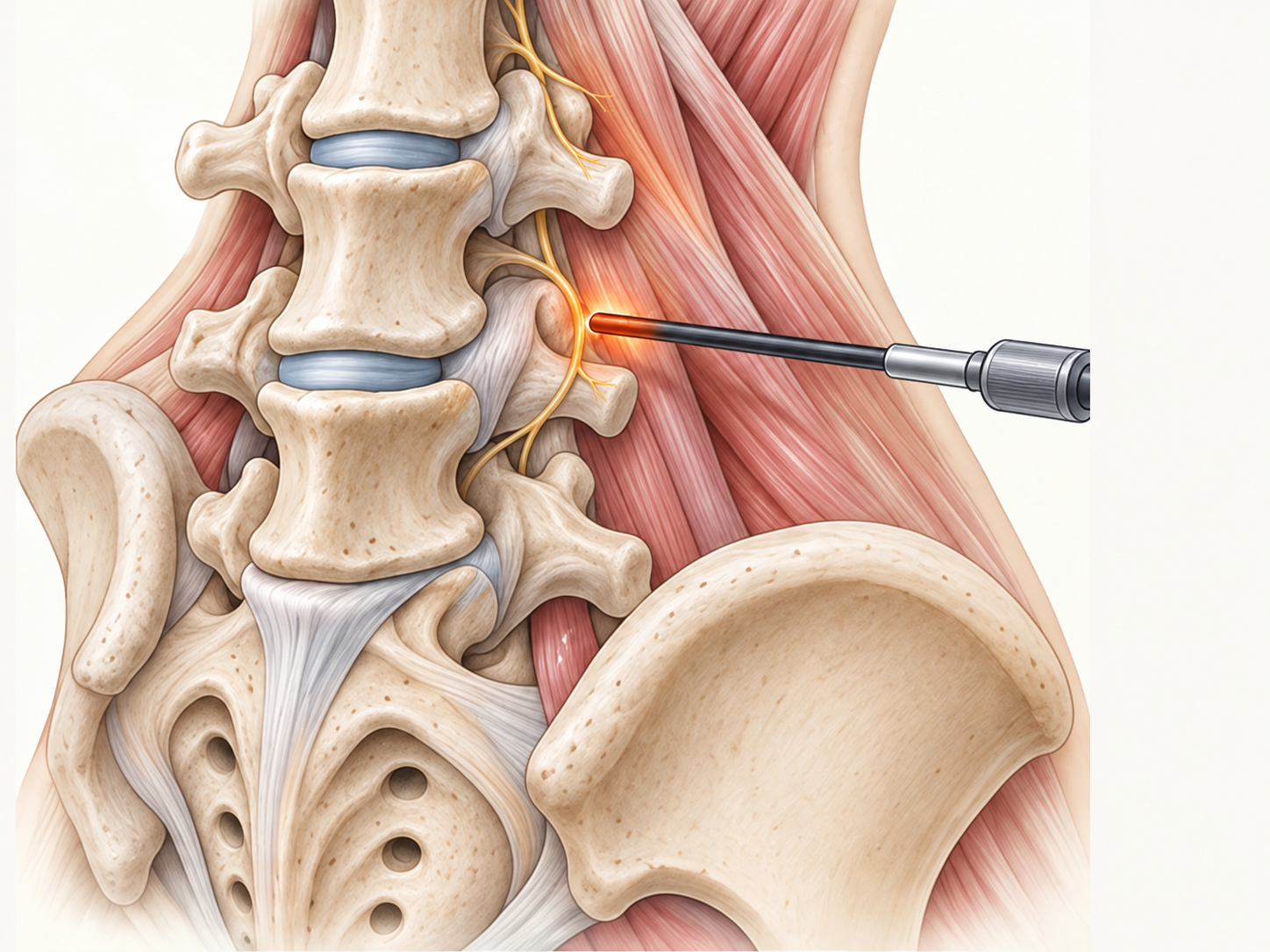
Radiofrequency ablation uses controlled energy near selected sensory nerves to reduce pain signals from a confirmed joint-related source. It is generally considered only after diagnostic steps support that target.
The procedure does not treat every cause of spine pain and does not reverse arthritis or other structural changes.
When it may be considered
- A pain pattern consistent with facet-mediated neck or low-back pain
- Meaningful response to appropriate diagnostic medial branch block testing
- Symptoms that continue to limit function despite non-procedural care
Radiofrequency ablation is generally considered only when the clinical pattern and response to appropriate medial branch block testing support the target.
Before, during and after
Before
The target should be supported by the clinical picture and diagnostic block response. Medical history, medications and procedure risks are reviewed.
During
Image guidance is used to position specialized needles near the selected nerves. Controlled radiofrequency energy is then applied according to the planned technique.
After
Post-procedure soreness can occur. Relief is not immediate for everyone and varies in degree and duration. Nerves can recover over time.
Alternatives and other next steps
- Continued rehabilitation and activity modification
- Medication coordination
- Reassessment of the diagnosis
- Other condition-specific care
Common questions
Does this treatment guarantee pain relief?
No. Results vary, and no procedure can guarantee relief. The expected role, limits and alternatives should be clear before a decision is made.
How is candidacy determined?
Dr. Ho considers the diagnosis, examination, imaging when relevant, prior care, health history, goals and whether a less invasive or different option makes more sense.
This page is educational. A specific treatment can be recommended only after an individual clinical evaluation.