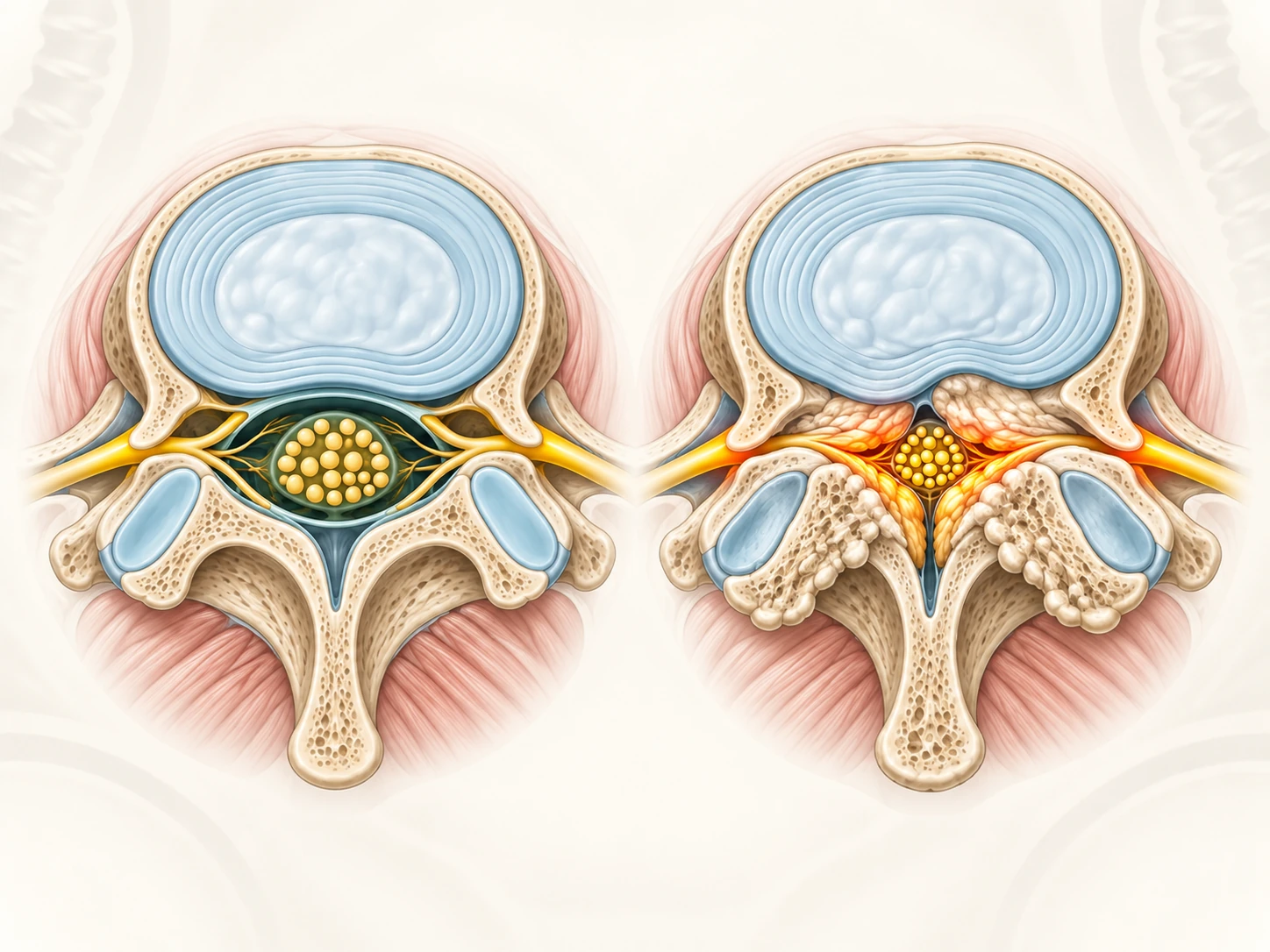
Understanding Spinal Stenosis
Overview
Spinal stenosis is narrowing around the spinal canal or nerve openings. In the low back, it can cause leg heaviness, pain or numbness with standing and walking.
What it may feel like
- Leg heaviness, aching or tingling while walking
- Symptoms that improve with sitting or leaning forward
- Back pain with reduced walking tolerance
Why the pattern matters
Symptoms that build with standing or walking and improve with sitting or leaning forward can suggest lumbar stenosis, but walking limitations may have more than one cause.
Potential causes
- Arthritis and bone-spur formation
- Thickened ligaments
- Disc bulging
- Naturally smaller spinal spaces
Other problems can look similar
- Hip arthritis
- Vascular circulation problems
- Peripheral neuropathy or balance disorders
How Dr. Ho evaluates the problem
The visit focuses on walking tolerance, balance, strength, sensation and symptom triggers. MRI or other imaging may be reviewed to see whether the degree and location of narrowing match the clinical pattern.
The role—and limits—of imaging
Imaging shows where narrowing exists; the examination and walking pattern help determine whether that narrowing explains the patient’s functional limits.
How treatment decisions are made
Treatment depends on the working diagnosis, symptom severity, function, prior care, overall health and personal goals. Reasonable options may include:
- Condition-specific exercise and pacing
- Medication coordination
- Epidural injection for selected symptom patterns
- Surgical consultation when function or neurologic health is significantly affected
Surgical evaluation may be appropriate when walking or daily function remains substantially limited, neurologic findings progress, or non-surgical options no longer provide reasonable function.
Frequently asked question
Can spinal stenosis affect walking?
Yes. Lumbar stenosis may cause pain, heaviness or numbness that builds with standing or walking and improves with rest or leaning forward.
When should I schedule an evaluation?
Consider an evaluation when symptoms persist, recur, interrupt sleep, limit work or exercise, or travel into an arm or leg. New numbness, weakness or a noticeable walking change deserves timely attention.
New loss of bladder or bowel control, numbness around the groin or saddle area, severe or rapidly worsening weakness, or symptoms after a major injury need prompt medical attention. Call 911 for an emergency.
This page is educational and does not replace an individual evaluation by a qualified healthcare professional.