Purpose and fit
What this treatment is intended to do
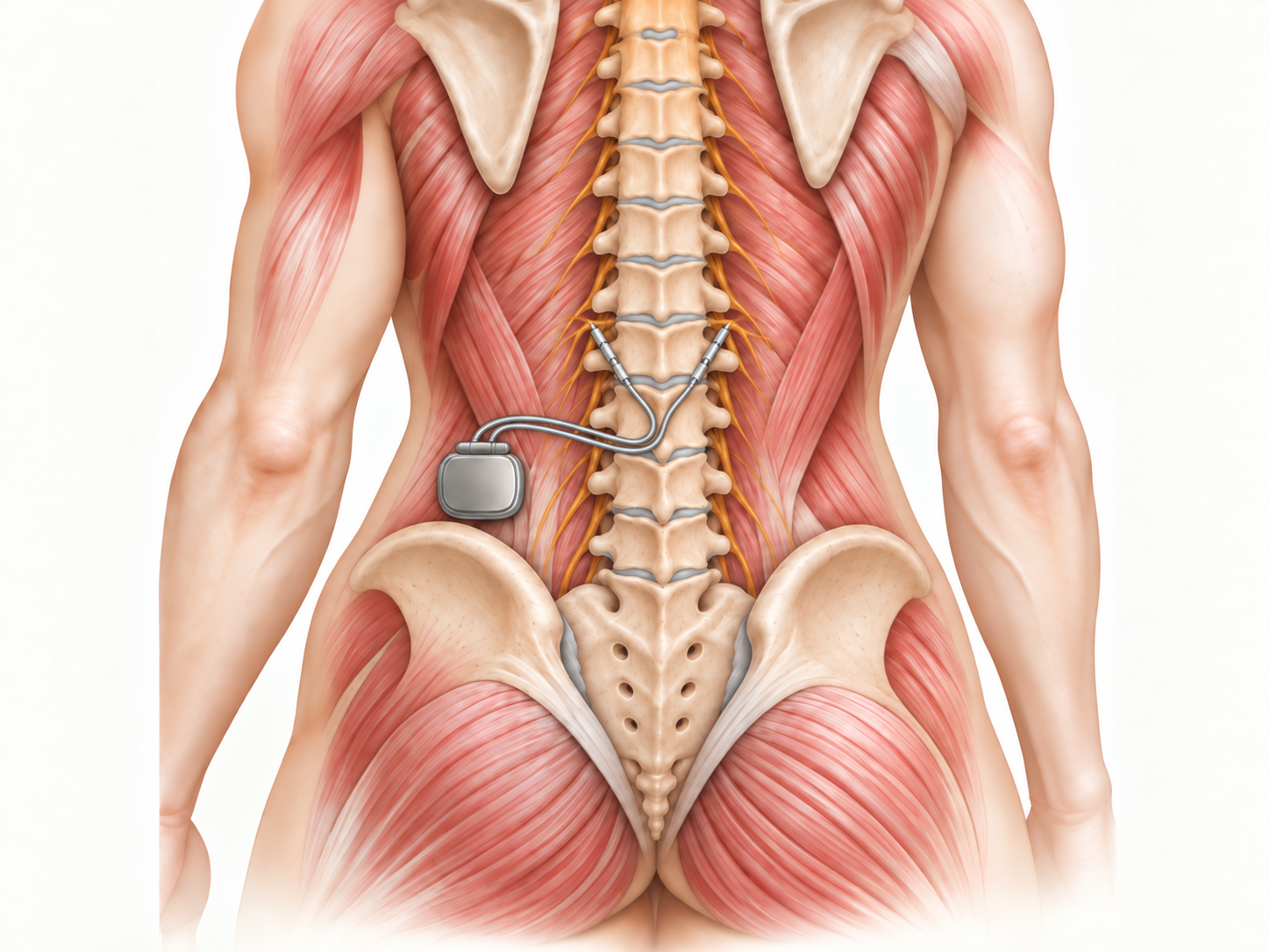
Restorative neurostimulation is an implantable therapy designed to activate nerves that control the lumbar multifidus muscles. ReActiv8 evaluation is limited to selected adults with intractable mechanical chronic low back pain associated with multifidus dysfunction after appropriate non-surgical care.
ReActiv8 is not intended for every type of low back pain and is not a general treatment for sciatica or other nerve-related leg pain. It involves an implanted device, procedure-specific risks and ongoing follow-up.
When it may be considered
- Persistent mechanical low back pain with a clinical pattern suggesting multifidus dysfunction
- Multifidus dysfunction supported by appropriate imaging or physiological testing
- Symptoms that remain substantially limiting after pain medication and physical therapy
- A patient who is not considered a candidate for spine surgery
Before, during and after
Before
Evaluation distinguishes mechanical low back pain and impaired lumbar muscle control from nerve-root pain, stenosis, hip or sacroiliac pain and other causes. Prior rehabilitation, medications, imaging, health history and surgical candidacy are reviewed.
During
When selected, the ReActiv8 system is implanted beneath the skin and connected to leads positioned to stimulate the nerves that activate the lumbar multifidus muscles. This page explains the treatment pathway; it does not determine candidacy.
After
Patients use the prescribed therapy sessions and return for device programming and follow-up. Improvement, when it occurs, is assessed over time through pain, function and daily activity rather than a single immediate response.
Alternatives and other next steps
- Condition-specific physical therapy and progressive rehabilitation
- Medication coordination
- Further diagnostic evaluation of other pain sources
- Surgical or another specialist’s opinion when appropriate
Common questions
Does this treatment guarantee pain relief?
No. Results vary, and no procedure can guarantee relief. The expected role, limits and alternatives should be clear before a decision is made.
How is candidacy determined?
Dr. Ho considers the diagnosis, examination, imaging when relevant, prior care, health history, goals and whether a less invasive or different option makes more sense.
This page is educational. A specific treatment can be recommended only after an individual clinical evaluation.