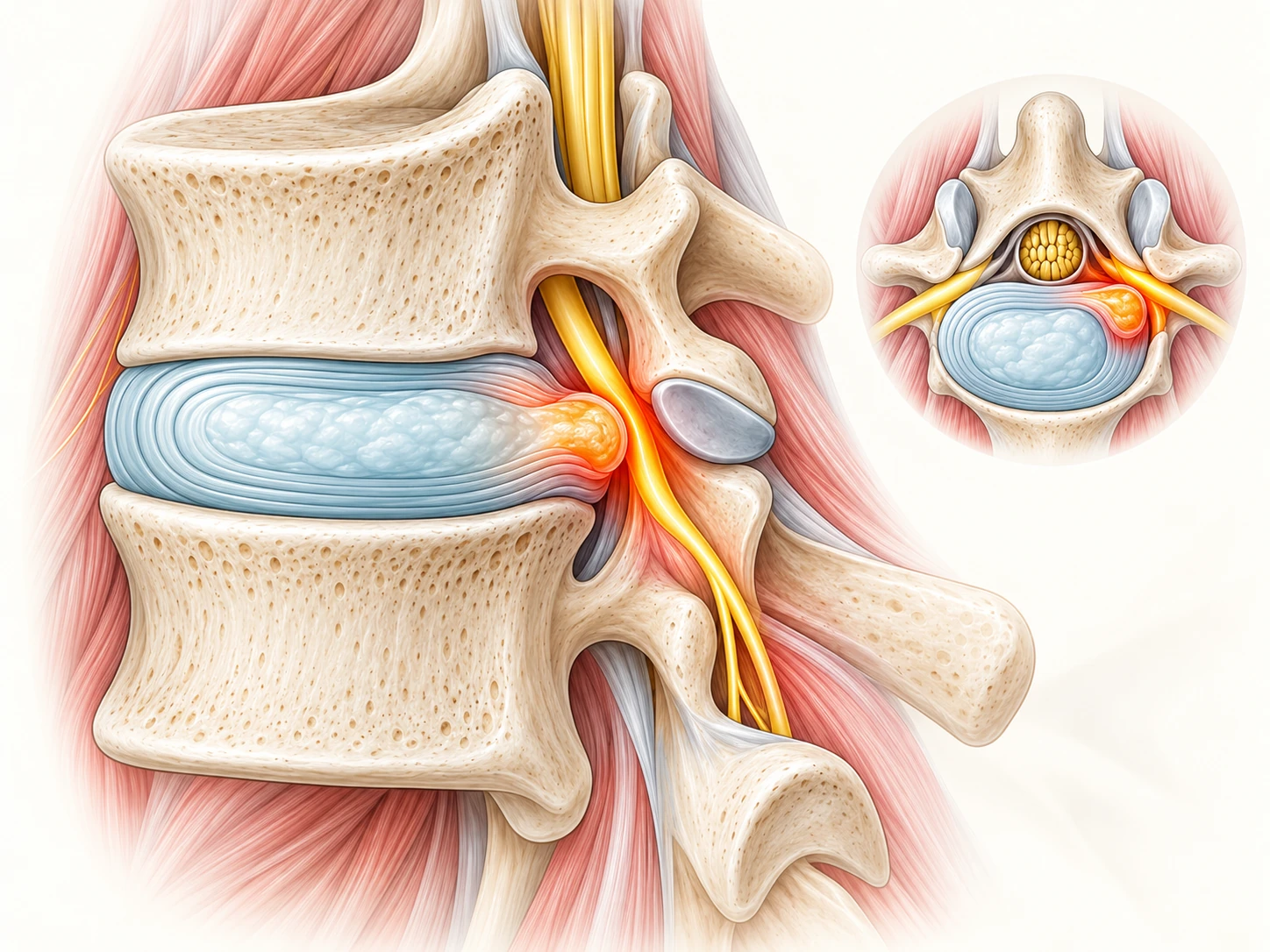
Understanding Herniated Disc
Overview
A herniated disc occurs when disc material extends beyond its usual boundary and may irritate a nearby nerve in the neck or low back.
What it may feel like
- Back or neck pain
- Radiating arm or leg pain
- Tingling, numbness or weakness along a nerve path
Why the pattern matters
A disc finding matters most when it corresponds with the side, level and neurologic pattern of the patient’s symptoms. A visible herniation without that match may be incidental.
Potential causes
- Age-related disc changes
- Repetitive lifting or twisting
- A sudden strain or injury
- Individual anatomy and other risk factors
Other problems can look similar
- Muscle or facet-joint pain
- Spinal stenosis
- Peripheral nerve conditions
How Dr. Ho evaluates the problem
MRI can show disc changes, but many findings do not cause symptoms. The most useful diagnosis connects the scan with the side, location and neurologic pattern found during the examination.
The role—and limits—of imaging
MRI can define disc anatomy and nerve contact. It cannot, by itself, prove which finding is causing pain or predict which treatment will help.
How treatment decisions are made
Treatment depends on the working diagnosis, symptom severity, function, prior care, overall health and personal goals. Reasonable options may include:
- Relative activity modification rather than prolonged bed rest
- Rehabilitation and progressive exercise
- Medication coordination
- Epidural steroid injection or surgical consultation in selected cases
A surgical opinion may be appropriate when there is progressive weakness, loss of function, emergency warning signs, or persistent nerve pain with a matching compressive lesion.
Frequently asked question
Does every herniated disc need a procedure?
No. Many improve with time and non-surgical care. Procedures or surgery are considered when symptoms, function and neurologic findings justify them.
When should I schedule an evaluation?
Consider an evaluation when symptoms persist, recur, interrupt sleep, limit work or exercise, or travel into an arm or leg. New numbness, weakness or a noticeable walking change deserves timely attention.
New loss of bladder or bowel control, numbness around the groin or saddle area, severe or rapidly worsening weakness, or symptoms after a major injury need prompt medical attention. Call 911 for an emergency.
This page is educational and does not replace an individual evaluation by a qualified healthcare professional.