Purpose and fit
What this treatment is intended to do
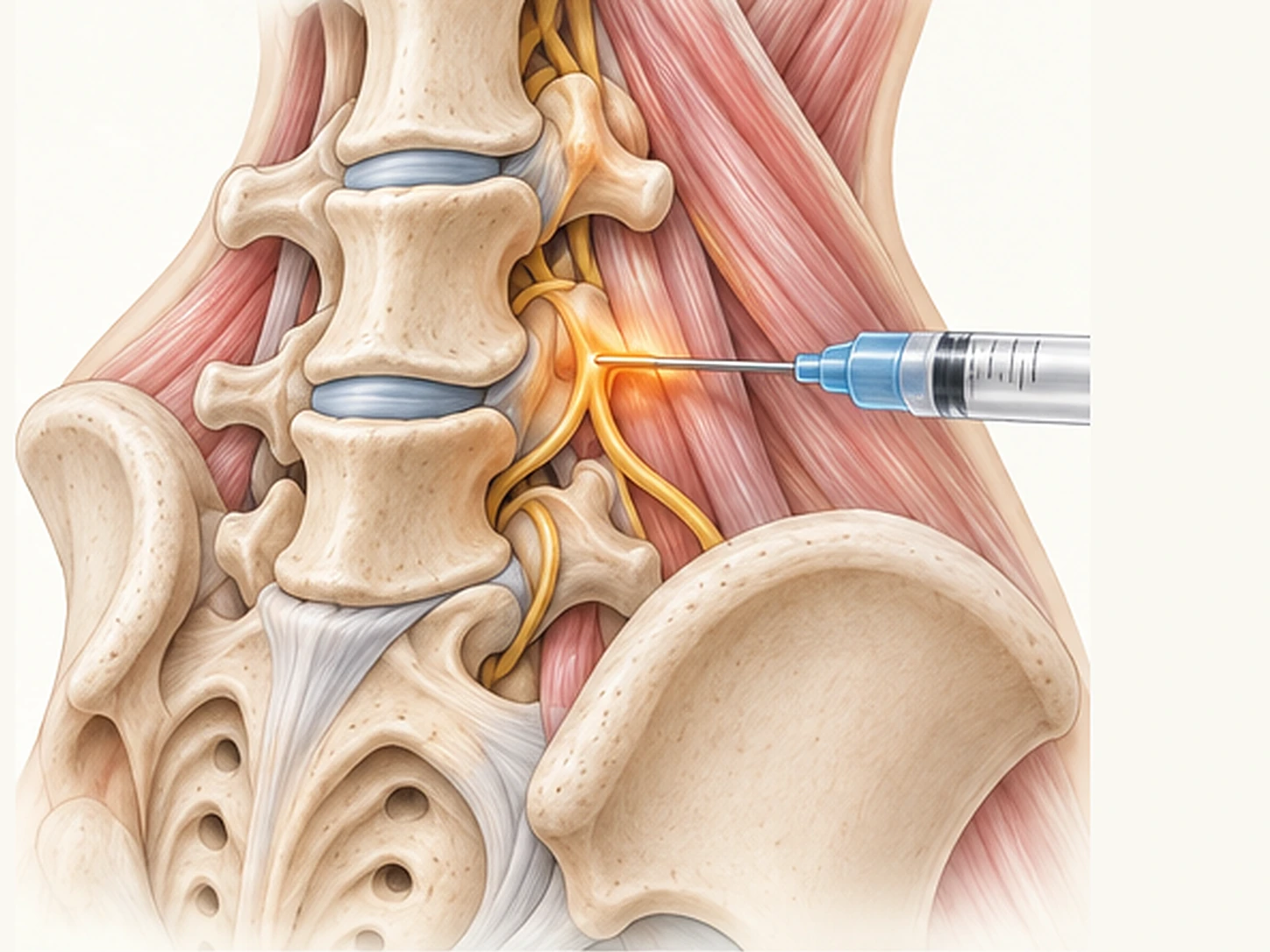
Facet joints can contribute to axial neck or low-back pain. A medial branch block may be used as a diagnostic step to test whether nerves serving those joints are likely carrying the pain signal.
A block can reduce uncertainty, but no test is perfect. It does not evaluate every possible source of spine pain.
When it may be considered
- Primarily axial neck or low-back pain
- Pain patterns and examination findings consistent with facet-joint involvement
- Symptoms that remain limiting after appropriate conservative care
A medial branch block may provide diagnostic information that helps determine whether radiofrequency ablation is worth considering. A block does not automatically lead to ablation.
Before, during and after
Before
History, examination and imaging are considered together. Imaging changes alone do not confirm that a facet joint is the pain source.
During
A small amount of medication is placed near selected medial branch nerves using image guidance. The patient then tracks the response during a defined period.
After
The result is interpreted as diagnostic information rather than a permanent treatment promise. The degree and duration of relief help guide whether another step is reasonable.
Alternatives and other next steps
- Rehabilitation and movement modification
- Medication coordination
- Evaluation of disc, sacroiliac, hip or other pain sources
- No further procedure when the diagnostic response is not meaningful
Common questions
Does this treatment guarantee pain relief?
No. Results vary, and no procedure can guarantee relief. The expected role, limits and alternatives should be clear before a decision is made.
How is candidacy determined?
Dr. Ho considers the diagnosis, examination, imaging when relevant, prior care, health history, goals and whether a less invasive or different option makes more sense.
This page is educational. A specific treatment can be recommended only after an individual clinical evaluation.