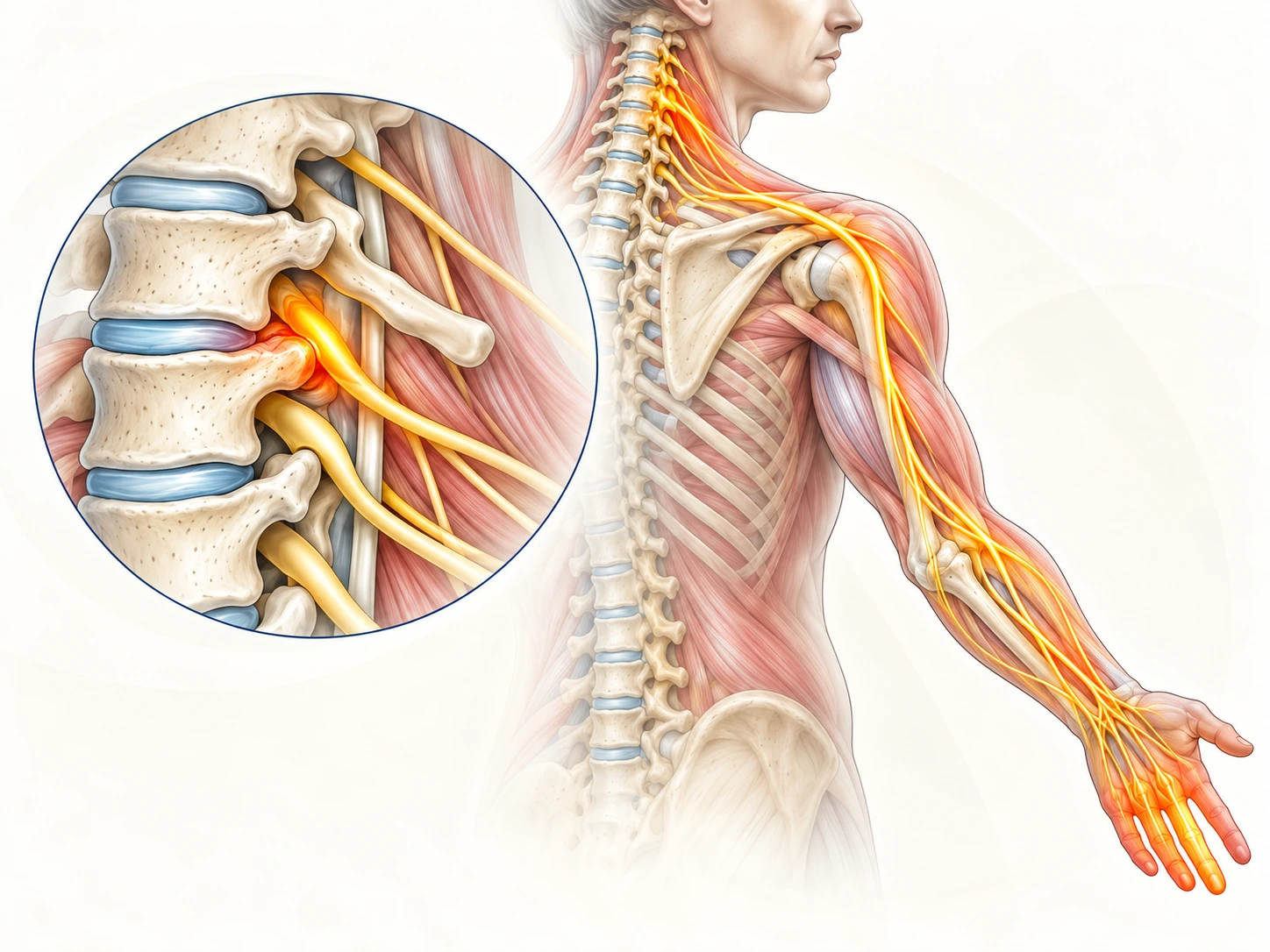
Understanding Radiculopathy
Overview
Radiculopathy occurs when a spinal nerve root is compressed or inflamed, producing symptoms along the nerve’s path into an arm or leg.
What it may feel like
- Radiating or electric pain
- Pins-and-needles or numbness
- Weakness or altered reflexes in some cases
Why the pattern matters
The distribution of pain, numbness or weakness is compared with known nerve-root pathways. Reflexes and muscle testing help distinguish a spinal nerve problem from a peripheral nerve problem.
Potential causes
- Herniated disc
- Spinal stenosis or bone spurs
- Inflammation around a nerve root
- Less commonly, another process affecting the nerve
Other problems can look similar
- Peripheral nerve entrapment
- Neuropathy
- Shoulder, hip or other joint conditions
How Dr. Ho evaluates the problem
The distribution of symptoms is compared with strength, sensation and reflex findings. Imaging and, in selected cases, electrodiagnostic testing can help confirm the level and rule out another nerve problem.
The role—and limits—of imaging
MRI and, in selected cases, electrodiagnostic testing can support the diagnosis. Results are interpreted in the context of the clinical pattern.
How treatment decisions are made
Treatment depends on the working diagnosis, symptom severity, function, prior care, overall health and personal goals. Reasonable options may include:
- Rehabilitation and movement guidance
- Medication coordination
- Targeted epidural injection for selected cases
- Urgent referral for progressive weakness or emergency warning signs
Progressive weakness, spinal cord findings, emergency symptoms or persistent disabling nerve compression may require surgical or another specialist’s evaluation.
Frequently asked question
How is radiculopathy different from sciatica?
Radiculopathy is the broader diagnosis of a spinal nerve-root problem. Sciatica commonly describes lumbar nerve symptoms that travel into the leg.
When should I schedule an evaluation?
Consider an evaluation when symptoms persist, recur, interrupt sleep, limit work or exercise, or travel into an arm or leg. New numbness, weakness or a noticeable walking change deserves timely attention.
New loss of bladder or bowel control, numbness around the groin or saddle area, severe or rapidly worsening weakness, or symptoms after a major injury need prompt medical attention. Call 911 for an emergency.
This page is educational and does not replace an individual evaluation by a qualified healthcare professional.