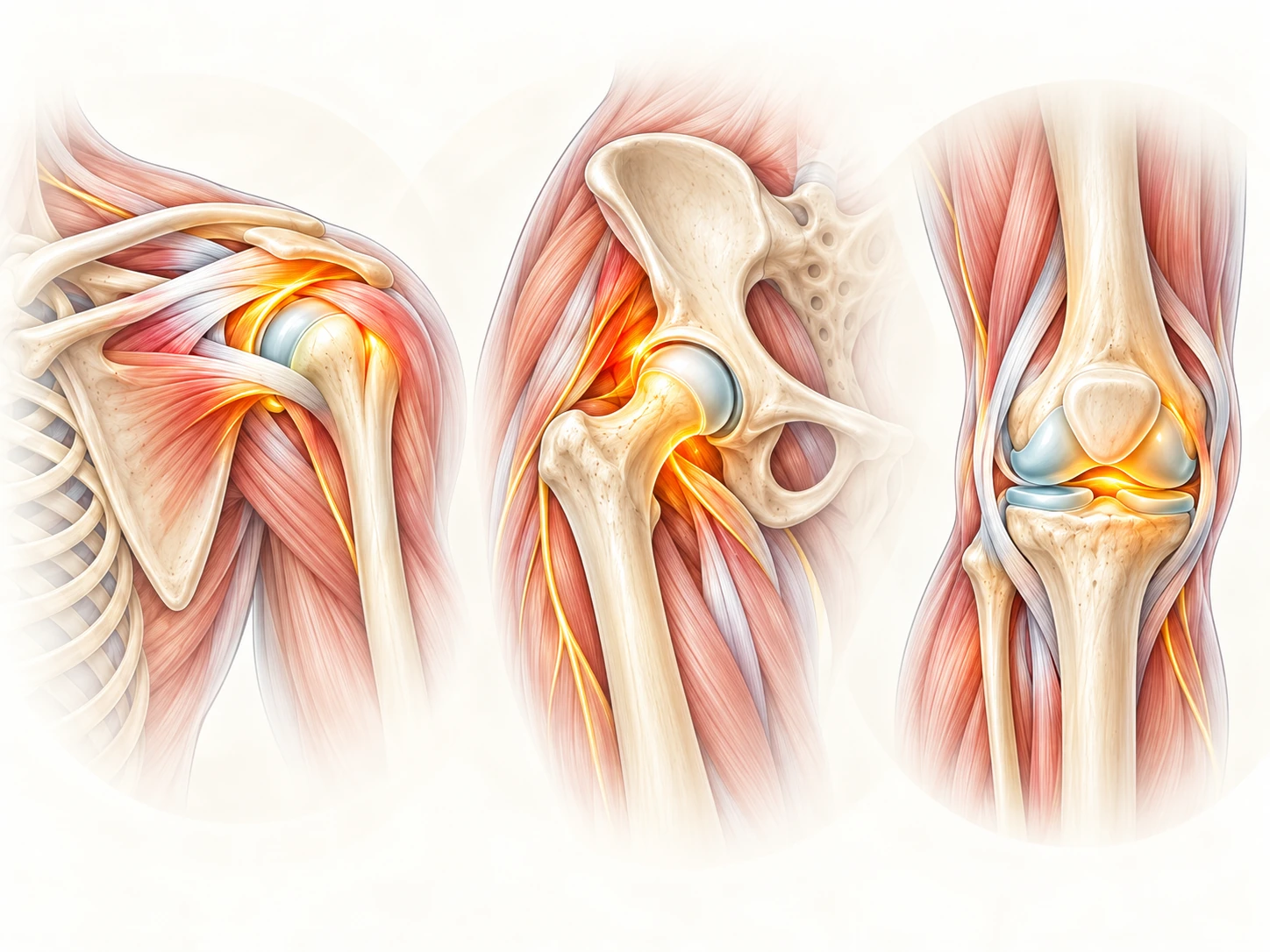
Understanding Joint & Musculoskeletal Pain
Overview
Shoulder, hip and knee pain may reflect arthritis, injury, overuse or irritation of nearby tendons and bursae. Treatment starts with locating the true source.
What it may feel like
- Pain with movement or weight-bearing
- Tenderness, swelling or catching
- Reduced mobility, strength or daily function
Why the pattern matters
Pain with a specific motion, loading pattern or position can help distinguish joint pain from pain referred from the spine or surrounding soft tissues.
Potential causes
- Osteoarthritis
- Tendon or bursa irritation
- Sprain, strain or overuse
- Referred pain from the spine or surrounding tissues
Other problems can look similar
- Referred pain from the neck or low back
- Tendon or bursa irritation
- Peripheral nerve conditions
How Dr. Ho evaluates the problem
The examination considers range of motion, strength, stability, tenderness and the movements that reproduce pain. X-rays, ultrasound or MRI may be considered when the result could change treatment.
The role—and limits—of imaging
X-rays, ultrasound or MRI may clarify anatomy when the result is likely to change the plan. Imaging is interpreted with the examination and functional limitations.
How treatment decisions are made
Treatment depends on the working diagnosis, symptom severity, function, prior care, overall health and personal goals. Reasonable options may include:
- Activity modification and rehabilitation
- Medication coordination
- Image-guided joint or soft-tissue injection for selected diagnoses
- Referral when structural injury needs additional evaluation
Orthopedic or another specialist’s evaluation may be appropriate for suspected fracture, instability, major structural injury, infection or symptoms that do not improve with appropriate care.
Frequently asked question
Can spine problems feel like joint pain?
Yes. Neck or low-back conditions can refer pain toward the shoulder, hip or knee, which is why a regional examination matters.
When should I schedule an evaluation?
Consider an evaluation when symptoms persist, recur, interrupt sleep, limit work or exercise, or travel into an arm or leg. New numbness, weakness or a noticeable walking change deserves timely attention.
New loss of bladder or bowel control, numbness around the groin or saddle area, severe or rapidly worsening weakness, or symptoms after a major injury need prompt medical attention. Call 911 for an emergency.
This page is educational and does not replace an individual evaluation by a qualified healthcare professional.